Introduction
Climate change is no longer a future concern—it is a present-day reality affecting communities, economies, and infrastructure around the world. Rising temperatures, more frequent flooding, prolonged droughts, stronger storms, sea-level rise, and extreme weather events are placing unprecedented pressure on roads, bridges, buildings, drainage systems, and other critical infrastructure.
As populations grow and urban development accelerates, civil engineers and construction companies must design infrastructure that can withstand these changing environmental conditions. This approach is known as infrastructure resilience—the ability of infrastructure systems to anticipate, resist, adapt to, recover from, and continue functioning after climate-related events.
For countries like Nigeria, where rapid urbanization and seasonal flooding pose significant challenges, investing in climate-resilient infrastructure is essential for sustainable economic growth, public safety, and environmental protection.
This article explores the relationship between climate change and infrastructure resilience, the engineering challenges involved, and the strategies used to build stronger, more sustainable infrastructure.
Understanding Climate Change
Climate change refers to long-term shifts in weather patterns caused largely by increased greenhouse gas emissions and human activities.
Some of the most noticeable impacts include:
- Rising global temperatures
- Increased rainfall intensity
- More frequent flooding
- Coastal erosion
- Droughts
- Heatwaves
- Stronger storms
- Sea-level rise
These environmental changes significantly affect infrastructure performance and longevity.
What Is Infrastructure Resilience?
Infrastructure resilience is the ability of infrastructure assets to continue operating before, during, and after extreme weather events while minimizing damage and recovery costs.
Resilient infrastructure is designed to:
- Resist environmental stress
- Recover quickly after disasters
- Maintain essential services
- Protect public safety
- Adapt to future climate conditions
Rather than simply repairing damaged infrastructure, resilient engineering focuses on preventing failures before they occur.
Why Infrastructure Resilience Matters
Infrastructure supports every aspect of modern society.
Critical infrastructure includes:
- Roads and highways
- Bridges
- Buildings
- Drainage systems
- Water supply networks
- Airports
- Railways
- Power systems
- Industrial facilities
When these systems fail because of climate-related disasters, communities experience:
- Transportation disruptions
- Economic losses
- Property damage
- Increased repair costs
- Reduced public safety
Building resilience helps reduce these risks.
How Climate Change Affects Infrastructure
1. Increased Flooding
Flooding is one of the biggest threats to infrastructure worldwide.
Floodwater can:
- Wash away roads
- Damage bridges
- Undermine foundations
- Collapse drainage systems
- Interrupt transportation
Proper drainage design and flood-resistant engineering are essential.
2. Rising Temperatures
Extreme heat affects construction materials.
High temperatures may cause:
- Asphalt softening
- Concrete expansion
- Steel deformation
- Pavement rutting
Engineers now consider future temperature projections during infrastructure design.
3. Coastal Erosion and Sea-Level Rise
Communities near coastlines face increasing risks from:
- Coastal flooding
- Saltwater intrusion
- Foundation erosion
- Structural corrosion
Protective structures and resilient coastal engineering help reduce these impacts.
4. Stronger Storms
More intense storms produce:
- Higher wind loads
- Falling debris
- Structural damage
- Utility failures
Buildings and bridges must be designed to resist stronger wind forces than in previous decades.
5. Drought and Soil Movement
Extended dry periods can lead to:
- Soil shrinkage
- Foundation settlement
- Cracking in buildings
- Reduced water availability
Proper geotechnical investigations help engineers address these challenges.
Principles of Climate-Resilient Infrastructure
Successful resilient infrastructure projects are built on several engineering principles.
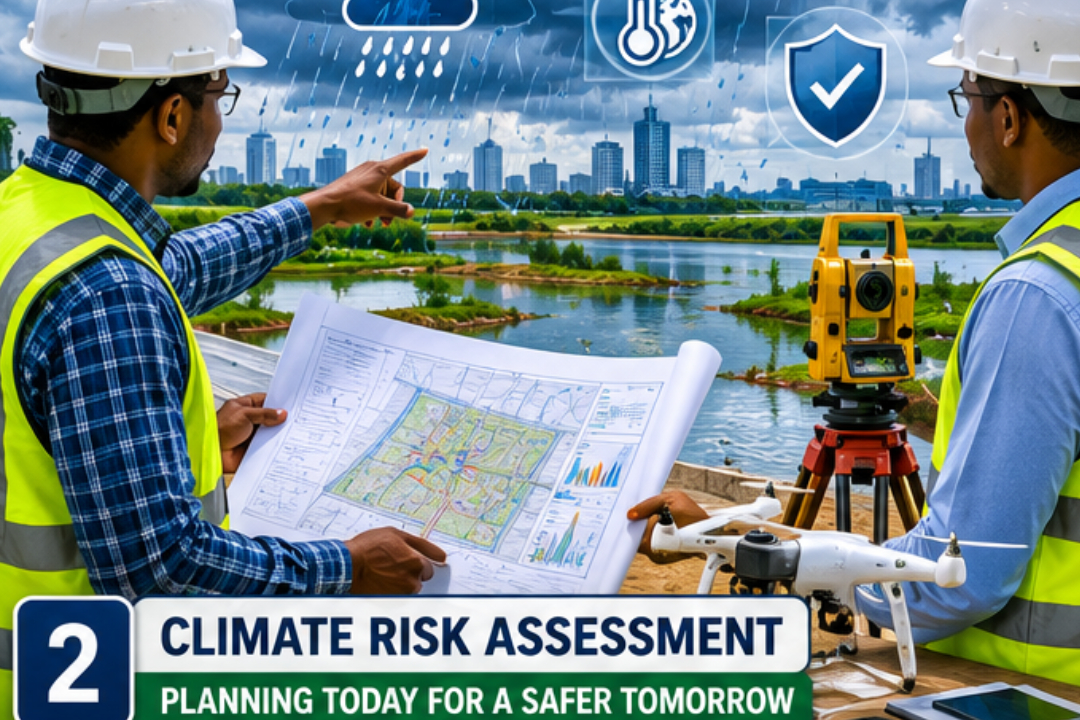
Risk Assessment
Before construction begins, engineers evaluate:
- Flood risks
- Soil conditions
- Climate projections
- Environmental hazards
- Historical weather data
This information supports better planning and design decisions.
Sustainable Design
Sustainable infrastructure incorporates:
- Energy-efficient systems
- Environmentally friendly materials
- Renewable energy integration
- Water conservation measures
These approaches reduce environmental impact while improving resilience.
Durable Construction Materials
Climate-resilient infrastructure relies on high-quality materials capable of resisting harsh environmental conditions.
Examples include:
- High-performance concrete
- Corrosion-resistant steel
- Permeable pavements
- Weather-resistant coatings
Quality materials reduce maintenance and extend service life.
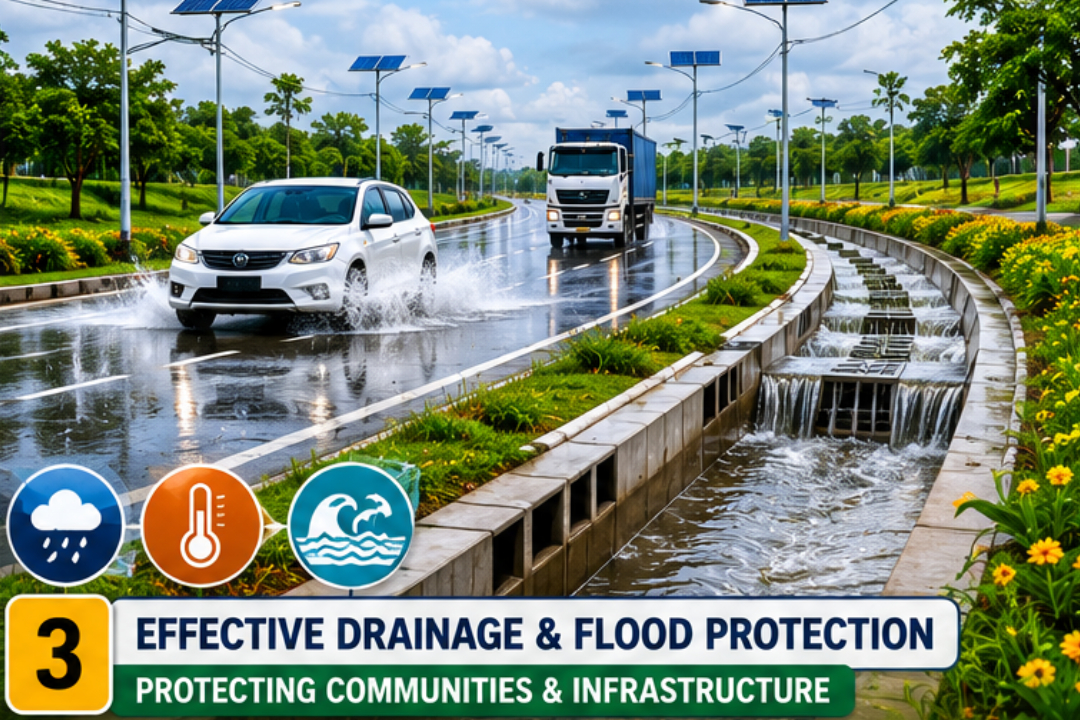
Effective Drainage Systems
Poor drainage is a leading cause of infrastructure failure.
Modern drainage design includes:
- Stormwater channels
- Culverts
- Retention ponds
- Underground drainage systems
- Sustainable Urban Drainage Systems (SuDS)
Proper drainage protects roads, buildings, and communities from flooding.
Flexible Engineering Designs
Infrastructure should be adaptable to future climate conditions.
Engineers incorporate:
- Expansion joints
- Elevated structures
- Flood barriers
- Modular construction methods
These features improve long-term performance.
Role of Civil Engineers in Climate Resilience
Civil engineers play a central role in creating resilient infrastructure by:
- Conducting environmental assessments
- Designing climate-adaptive structures
- Improving drainage systems
- Selecting durable construction materials
- Supervising quality construction
- Implementing maintenance programs
Their expertise ensures infrastructure remains safe and functional under changing climate conditions.
Technologies Supporting Climate-Resilient Infrastructure
Modern engineering increasingly relies on advanced technologies, including:
Building Information Modeling (BIM)
Improves collaboration and predicts infrastructure performance.
Geographic Information Systems (GIS)
Supports flood mapping, land-use planning, and environmental analysis.
Drone Surveys
Provide accurate site monitoring and infrastructure inspections.
Artificial Intelligence (AI)
Helps predict infrastructure risks and optimize maintenance schedules.
Smart Sensors
Monitor structural health in bridges, roads, and buildings in real time.
These technologies improve decision-making and reduce long-term infrastructure risks.
Benefits of Investing in Climate-Resilient Infrastructure
Organizations and governments that invest in resilient infrastructure enjoy numerous long-term benefits.
Reduced Maintenance Costs
Well-designed infrastructure experiences fewer failures and lower repair expenses.
Longer Asset Lifespan
Durable infrastructure remains operational for decades despite environmental challenges.
Improved Public Safety
Resilient infrastructure minimizes accidents and protects communities during disasters.
Economic Growth
Reliable infrastructure attracts investment, supports business operations, and stimulates economic development.
Environmental Sustainability
Climate-smart construction reduces carbon emissions and promotes responsible resource management.
Best Practices for Building Climate-Resilient Infrastructure
Engineering firms should:
- Conduct comprehensive climate risk assessments
- Design for future climate conditions rather than historical averages
- Prioritize high-quality construction materials
- Implement effective drainage systems
- Use digital engineering technologies
- Perform regular infrastructure inspections
- Establish preventive maintenance programs
- Follow national and international engineering standards
These practices ensure infrastructure remains safe, reliable, and sustainable.
Why Choose Heaven’s Gate Engineering & Construction Ltd.?
At Heaven’s Gate Engineering & Construction Ltd., we understand that infrastructure must be designed for both today’s needs and tomorrow’s climate challenges.
Our engineering solutions focus on:
- Sustainable infrastructure development
- Climate-resilient road construction
- Advanced drainage engineering
- Structural safety and durability
- High-quality construction standards
- Preventive maintenance strategies
- Innovative engineering technologies
We are committed to delivering infrastructure that supports economic development while withstanding the impacts of climate change.