What Happens Before the First Block?
A building may look impressive when the walls are finished, the windows are installed, and the final paint is applied. But some of the most important work happens long before the building begins to look like a building.
Before the first block is laid or the first column is cast, engineers and construction professionals must make decisions about the site, foundation, structural system, materials, drainage, loads, construction methods, and project execution.
These decisions can influence the building’s strength, durability, functionality, cost, and long-term performance.
In other words, good construction does not begin when construction workers arrive on site.
It begins with good engineering.
1. Understanding the Site Before Designing the Building
Every construction project starts with a piece of land, but not every site behaves the same way.
Soil conditions, groundwater, topography, accessibility, surrounding structures, drainage patterns, and environmental conditions can all affect construction.
A professional site assessment helps the project team understand the conditions they are working with before major construction decisions are made.
For example, a site with weak or highly compressible soil may require a different foundation solution from a site with competent bearing strata.
This is why engineers should not simply assume that one foundation system will work everywhere.
2. Soil Investigation: The Foundation of the Foundation
One of the most important investigations before construction is understanding the ground beneath the proposed structure.
Soil investigation can provide information about:
- Soil layers
- Bearing capacity
- Groundwater conditions
- Soil density and strength
- Settlement characteristics
- Potential problem soils
- Appropriate foundation options
The results help structural and geotechnical engineers make informed decisions about the foundation.
A building may be beautifully designed above ground, but its long-term performance still depends heavily on what happens below it.
3. Choosing the Right Foundation
The foundation transfers structural loads into the ground.
Depending on the building and site conditions, engineers may consider foundation systems such as:
- Isolated footings
- Strip foundations
- Combined footings
- Raft foundations
- Pile foundations
- Other specialized foundation systems
The appropriate solution depends on factors such as structural loads, soil characteristics, groundwater, settlement requirements, site constraints, and applicable design standards.
The goal isn’t simply to build a strong foundation—it is to design a foundation appropriate for the structure and ground conditions.
4. Structural Design Is More Than Making a Building Stand
A structural engineer considers how loads move through the building.
These can include:
- Dead loads
- Live loads
- Wind loads
- Environmental loads
- Other applicable imposed or accidental loads
The structural system must provide adequate strength and stability while also considering serviceability and durability.
Depending on the project, structural elements may include:
- Columns
- Beams
- Slabs
- Shear walls
- Frames
- Foundations
- Reinforcement systems
Every element forms part of a larger structural system.
5. Drainage Should Be Considered Early
Water can become a serious problem when it is not properly managed.
Poor drainage can contribute to:
- Waterlogging
- Soil erosion
- Foundation problems
- Pavement deterioration
- Dampness
- Flooding around buildings
Good site planning considers where stormwater will go and how it will be safely collected, conveyed, and discharged.
Drainage isn’t something that should be treated as an afterthought.
Water needs a path—and engineering should provide it.
6. Materials Matter
Concrete, reinforcement steel, blocks, aggregates, roofing materials, waterproofing products, and other construction materials all contribute to project performance.
Using the right material is only part of the equation.
Materials also need to be:
- Properly specified
- Correctly stored
- Properly tested where required
- Installed according to the design and specifications
- Protected from damage and contamination
Poor material handling or incorrect installation can compromise otherwise good engineering.
7. Construction Quality Control
A good design can still produce poor results if construction is not properly controlled.
Quality control may involve checking:
- Concrete production and placement
- Reinforcement installation
- Formwork
- Dimensions and levels
- Material quality
- Curing
- Workmanship
- Testing and inspection
Regular site inspections can help identify problems before they become expensive to correct.
Quality should be built into the process—not inspected in only at the end.
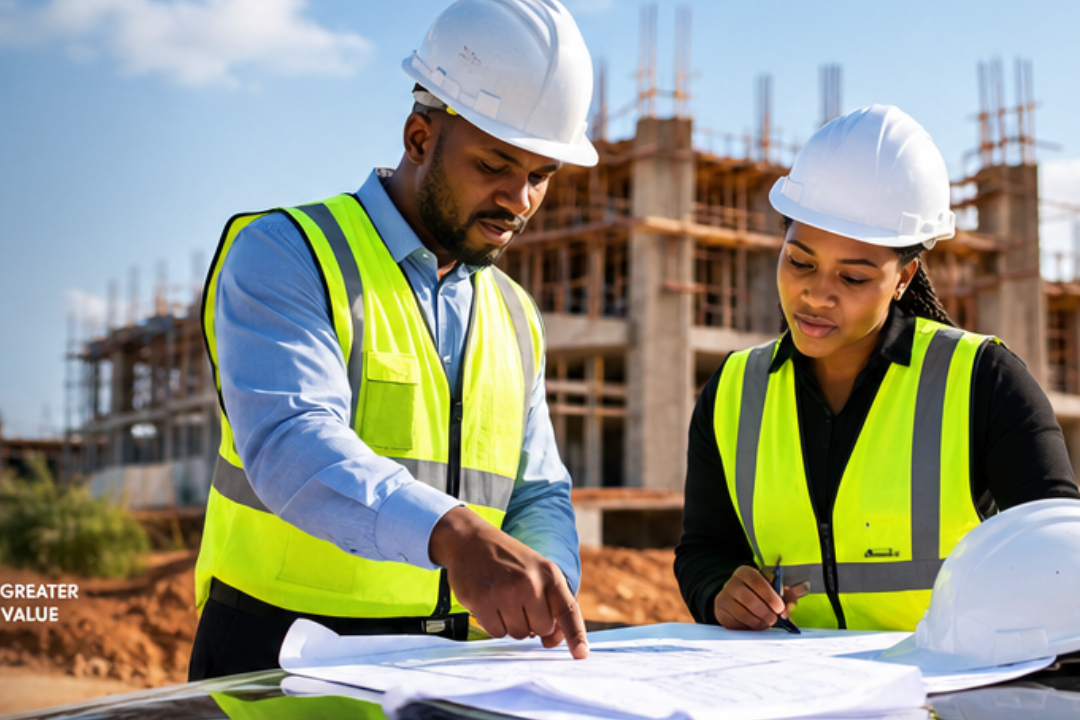
8. Coordination Between Engineers, Architects, and Contractors
Construction involves multiple professionals.
Architects may focus on spatial planning and aesthetics. Structural engineers focus on structural performance. Mechanical, electrical, plumbing, and other specialists address building systems.
Contractors then translate the designs into physical construction.
If these teams are not properly coordinated, conflicts can occur.
For example, a structural beam may interfere with mechanical services, or a drainage route may conflict with another site element.
Early coordination helps identify these issues before they become costly site problems.
9. Planning the Construction Sequence
Construction is not simply a collection of independent activities.
Activities often depend on one another.
For example:
Site preparation → excavation → foundation → columns → beams → slabs → walls → services → finishes
The exact sequence varies by project, but proper planning helps teams understand:
- What needs to happen first
- Which activities can run simultaneously
- What resources are required
- Where potential bottlenecks may occur
- How progress will be monitored
Better planning can make construction more organized and reduce avoidable disruption.
10. Safety Starts Before Construction
Construction safety should begin during planning.
Before work starts, teams should consider hazards associated with:
- Excavation
- Working at height
- Heavy equipment
- Lifting operations
- Electrical systems
- Temporary works
- Material handling
- Traffic and site movement
Risk assessment and appropriate safety procedures can help reduce exposure to hazards.
A productive construction site is not just one that moves quickly.
It is one where people can work safely.
Why These Early Decisions Matter
Many construction problems become expensive because they are discovered too late.
A design issue identified during planning may be relatively straightforward to resolve.
The same issue discovered after construction has progressed may require demolition, redesign, additional materials, additional labour, and schedule changes.
This is why early engineering and coordination are so important.
Think of it this way:
Good planning → Better coordination → Better execution → Fewer surprises → Better project outcomes
Technology Is Changing Pre-Construction
Modern construction teams increasingly use digital tools to improve planning and coordination.
Building Information Modeling (BIM), 3D modeling, digital surveying, structural analysis software, project scheduling platforms, drones, and other technologies can help teams visualize and coordinate projects before and during construction.
Technology doesn’t replace engineering judgment.
Instead, it can give engineers and project teams better information for making decisions.
The Real Cost of Skipping Proper Planning
Trying to save time or money before construction begins can sometimes create larger costs later.
Examples include:
- Inadequate site investigation
- Incomplete drawings
- Poor coordination
- Incorrect material specifications
- Weak project planning
- Inadequate drainage planning
- Poor quality control
The cheapest decision at the beginning is not always the most economical decision over the life of a project.
A better approach is to consider whole-project value rather than only the initial construction cost.
A Better Approach to Starting a Construction Project
Before construction begins, project owners should consider asking:
✅ Has the site been properly investigated?
✅ Has the structural system been professionally designed?
✅ Is the foundation appropriate for the site?
✅ Are architectural and engineering drawings coordinated?
✅ Is drainage properly planned?
✅ Are materials clearly specified?
✅ Is there a realistic construction schedule?
✅ Are quality-control procedures in place?
✅ Are safety risks identified?
✅ Is the project being supervised by competent professionals?
These questions can help establish a stronger foundation for the project—before physical construction begins.
Final Thoughts
The finished building is what everyone sees.
But behind that building are thousands of engineering decisions, calculations, inspections, drawings, tests, conversations, and construction activities.
The quality of the final structure is influenced long before the final wall is painted.
That is why professional planning, engineering, coordination, quality control, and site supervision are essential parts of successful construction.
At Heaven’s Gate Engineering & Construction, we believe every project deserves careful planning and professional execution—from the earliest design decisions to the work taking place on site.
🏗️ Build with purpose. Build with precision. Build right.
📞 Contact Heaven’s Gate Engineering & Construction:
+234 816 819 1194
🌐 For more information:
https://heavensgateengineering.com.ng/
https://heavensgateengineering.com/