
Introduction
Every durable road begins with a strong foundation. While road users often focus on the asphalt or concrete surface, the true strength and longevity of any road lie beneath it—in the subgrade. Proper subgrade preparation is one of the most critical stages in road construction because it provides the structural support required to withstand traffic loads, environmental conditions, and long-term use.
A poorly prepared subgrade can lead to premature pavement failure, potholes, cracking, uneven settlement, and costly maintenance. On the other hand, a well-prepared subgrade improves pavement performance, extends the lifespan of the road, reduces maintenance costs, and enhances safety for motorists.
This article explains the importance of subgrade preparation in road construction, the processes involved, common challenges, and best engineering practices that ensure the successful delivery of long-lasting roads.
What Is a Subgrade?
A subgrade is the natural soil or prepared ground that forms the foundation upon which all other pavement layers are constructed. It supports the sub-base, base course, and the final road surface.
Because every load from vehicles is eventually transferred to the subgrade, its quality directly affects the performance of the entire pavement structure.
Without a stable subgrade, even high-quality asphalt or concrete roads can deteriorate quickly.
Why Is Subgrade Preparation Important?
Subgrade preparation ensures that the underlying soil has adequate strength, stability, and drainage capacity to support the road throughout its design life.
Proper preparation helps:
- Increase road durability
- Prevent pavement failure
- Improve load distribution
- Minimize settlement
- Reduce maintenance costs
- Improve road safety
- Extend infrastructure lifespan
For highways, urban roads, industrial roads, and rural access roads, proper subgrade preparation is essential for long-term performance.
Stages of Subgrade Preparation
1. Site Investigation
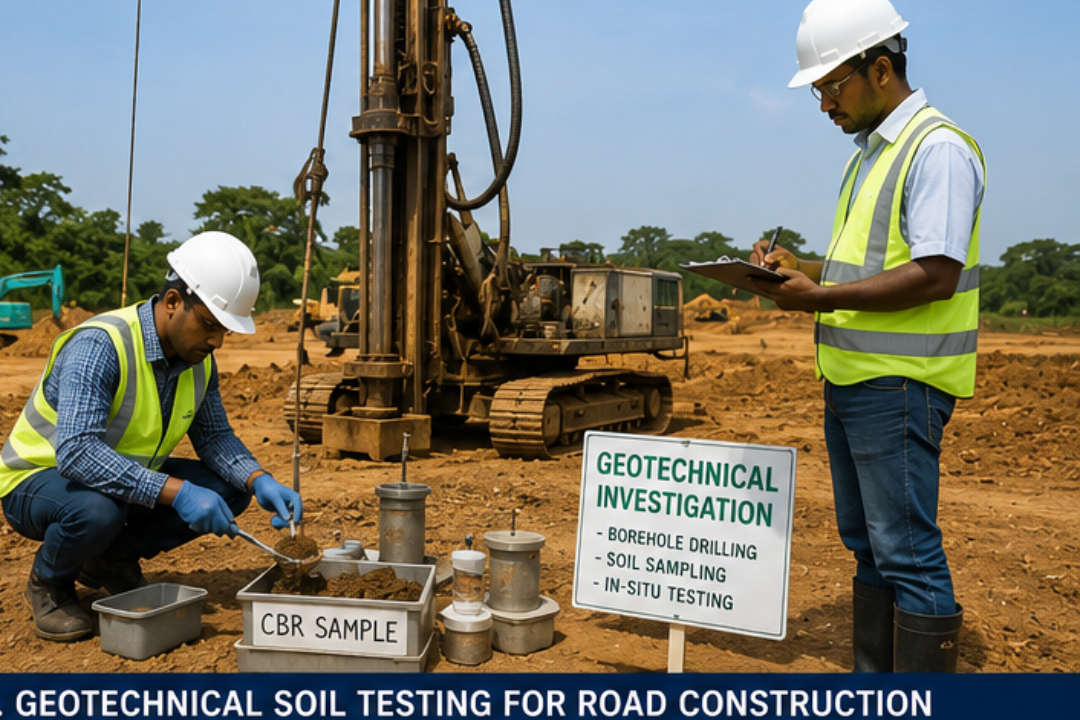
Before construction begins, civil engineers conduct a detailed site investigation to understand soil conditions.
This process typically includes:
- Soil sampling
- Geotechnical investigations
- Moisture content analysis
- Soil classification
- Bearing capacity tests
- California Bearing Ratio (CBR) tests
These investigations determine whether the existing soil can support the proposed road or requires improvement.
2. Clearing and Grubbing
The construction area is cleared of:
- Trees
- Vegetation
- Roots
- Organic matter
- Debris
Organic materials decompose over time and create weak zones beneath the pavement.
Proper clearing ensures a stable working platform.
3. Excavation and Earthworks
Unsuitable soil is removed and replaced with suitable fill material where necessary.
Earthworks involve:
- Cutting high ground
- Filling low areas
- Establishing correct road levels
- Achieving proper gradients
Balanced earthworks reduce construction costs while improving stability.
4. Soil Stabilization
Some natural soils are too weak for road construction.
Engineers improve soil strength using stabilization techniques such as:
- Lime stabilization
- Cement stabilization
- Fly ash stabilization
- Mechanical stabilization
- Geotextiles and geogrids
These methods significantly improve load-bearing capacity.
5. Moisture Control
Proper moisture content is essential for achieving maximum soil strength.
If soil is:
Too dry → It cannot compact properly.
Too wet → It becomes unstable and weak.
Engineers carefully adjust moisture before compaction.
6. Compaction
Compaction is one of the most important stages of subgrade preparation.
Heavy rollers compress soil particles to eliminate air voids and increase density.
Benefits include:
- Higher bearing capacity
- Reduced settlement
- Increased stability
- Better load distribution
- Improved pavement performance
Compaction quality is verified through field density tests.
Common Challenges During Subgrade Preparation
Weak Soil Conditions
Soft clay and loose sandy soils may not provide sufficient support.
Solutions include:
- Soil replacement
- Chemical stabilization
- Reinforcement using geosynthetics
Poor Drainage
Water is one of the biggest threats to road foundations.
Poor drainage can lead to:
- Soil softening
- Loss of strength
- Pavement cracking
- Pothole formation
Proper drainage systems protect the subgrade from water infiltration.
High Groundwater Levels
High groundwater reduces soil stability and complicates construction.
Engineers use:
- Dewatering systems
- Drainage blankets
- Subsurface drains
to maintain stable conditions.
Inadequate Compaction
Poor compaction causes uneven settlement and pavement failure.
Quality control testing ensures required compaction standards are achieved before proceeding.
Benefits of Proper Subgrade Preparation
1. Longer Road Lifespan
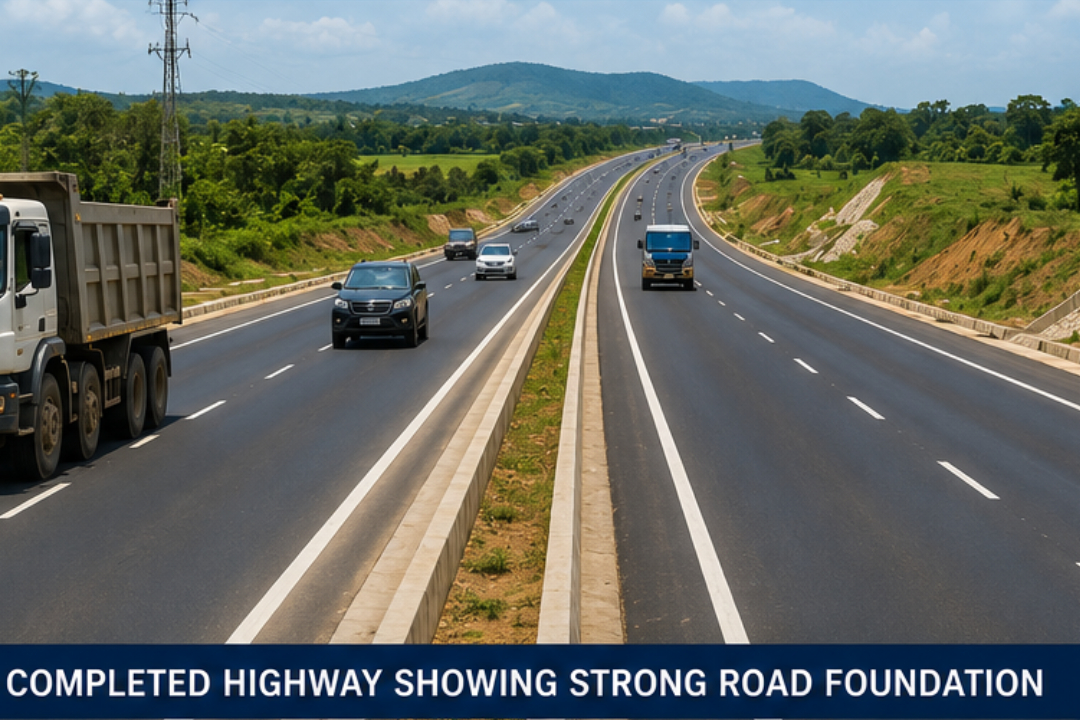
A strong foundation enables roads to withstand traffic for decades with minimal deterioration.
2. Reduced Maintenance Costs
Proper preparation minimizes:
- Potholes
- Rutting
- Surface cracking
- Pavement deformation
This significantly lowers long-term maintenance expenses.
3. Improved Road Safety
Stable roads provide:
- Better driving comfort
- Improved skid resistance
- Reduced accident risks
- More consistent pavement performance
4. Better Load Distribution
Heavy vehicles generate enormous stresses.
A properly prepared subgrade distributes these loads evenly throughout the pavement structure, reducing structural damage.
5. Enhanced Construction Quality
Subgrade preparation forms the basis for quality road construction.
Every subsequent layer depends on the stability of the foundation beneath it.
Quality Control in Subgrade Construction
Professional engineering firms perform several quality tests, including:
- California Bearing Ratio (CBR) Test
- Plate Load Test
- Field Density Test
- Moisture Content Test
- Proctor Compaction Test
- Soil Classification Test
These tests verify that the prepared subgrade meets engineering design requirements.
Modern Technologies Used in Subgrade Preparation
Today’s road construction projects increasingly use advanced technologies such as:
- GPS-guided earthmoving equipment
- Drone surveying
- Laser grading systems
- Intelligent compaction rollers
- Geographic Information Systems (GIS)
- Building Information Modeling (BIM)
These technologies improve accuracy, productivity, and overall project quality.
Why Choose Professional Civil Engineers for Road Construction?
Experienced engineering firms understand that every successful road begins with proper planning and foundation preparation.
Professional engineers ensure:
- Comprehensive soil investigations
- Accurate design calculations
- Quality material selection
- Proper compaction procedures
- Effective drainage systems
- Compliance with engineering standards
- Long-term pavement performance
At Heaven’s Gate Engineering & Construction Ltd., we apply industry best practices and modern engineering techniques to deliver durable, safe, and sustainable road infrastructure projects across Nigeria.
Conclusion
Subgrade preparation is the backbone of every successful road construction project. Although hidden beneath the pavement, it plays the most important role in supporting traffic loads, preventing pavement failures, and extending road lifespan.
Investing in proper soil investigation, stabilization, compaction, and drainage during the early stages of construction saves significant maintenance costs while ensuring safe and reliable transportation infrastructure for many years.
Whether constructing highways, residential roads, industrial access roads, or commercial developments, quality subgrade preparation remains the key to building roads that stand the test of time.
Frequently Asked Questions (FAQs)
1. What is a subgrade in road construction?
A subgrade is the prepared natural soil that supports all the pavement layers in a road. It forms the foundation of the entire road structure.
2. Why is subgrade preparation important?
Proper subgrade preparation improves road strength, prevents pavement failure, enhances drainage, and extends the lifespan of the road.
3. What tests are performed on a road subgrade?
Common tests include the California Bearing Ratio (CBR) test, Proctor compaction test, field density test, moisture content test, and soil classification tests.
4. What happens if a road has a weak subgrade?
A weak subgrade can cause potholes, cracking, rutting, uneven settlement, drainage problems, and expensive repairs.
5. How can weak soil be improved for road construction?
Weak soils can be strengthened through soil stabilization using lime, cement, fly ash, geotextiles, or by replacing unsuitable soil with engineered fill.