Infrastructure and buildings are valuable long-term investments that require continuous care and maintenance to remain safe, functional, and durable. Unfortunately, many property owners, organizations, and governments neglect maintenance until major problems arise. What begins as a small defect can quickly escalate into severe structural damage, safety hazards, and expensive repairs.
Neglected maintenance is one of the leading causes of infrastructure deterioration worldwide. Roads develop potholes, drainage systems fail, buildings weaken, and public infrastructure loses functionality when routine inspections and repairs are ignored.
This article explores the major impacts of neglected maintenance in construction and infrastructure and why preventive maintenance is essential for long-term sustainability.
What Is Neglected Maintenance?
Neglected maintenance occurs when buildings, roads, bridges, drainage systems, and other infrastructure are not regularly inspected, repaired, or serviced.
Examples include:
- Ignoring small structural cracks
- Failing to repair leaking roofs
- Allowing drainage systems to clog
- Delaying road resurfacing
- Skipping routine inspections
Over time, these minor issues grow into major structural and operational problems.
Why Maintenance Matters in Construction
Every structure experiences wear and tear due to:
- Weather conditions
- Water exposure
- Traffic loads
- Material aging
- Environmental factors
Maintenance helps detect and fix problems early before they become serious.
Without maintenance:
- Infrastructure lifespan reduces
- Repair costs increase
- Safety risks rise
- Structural failure becomes more likely
Major Impacts of Neglected Maintenance
1. Structural Deterioration
One of the most serious consequences of poor maintenance is structural deterioration.
Common signs include:
- Cracked walls and foundations
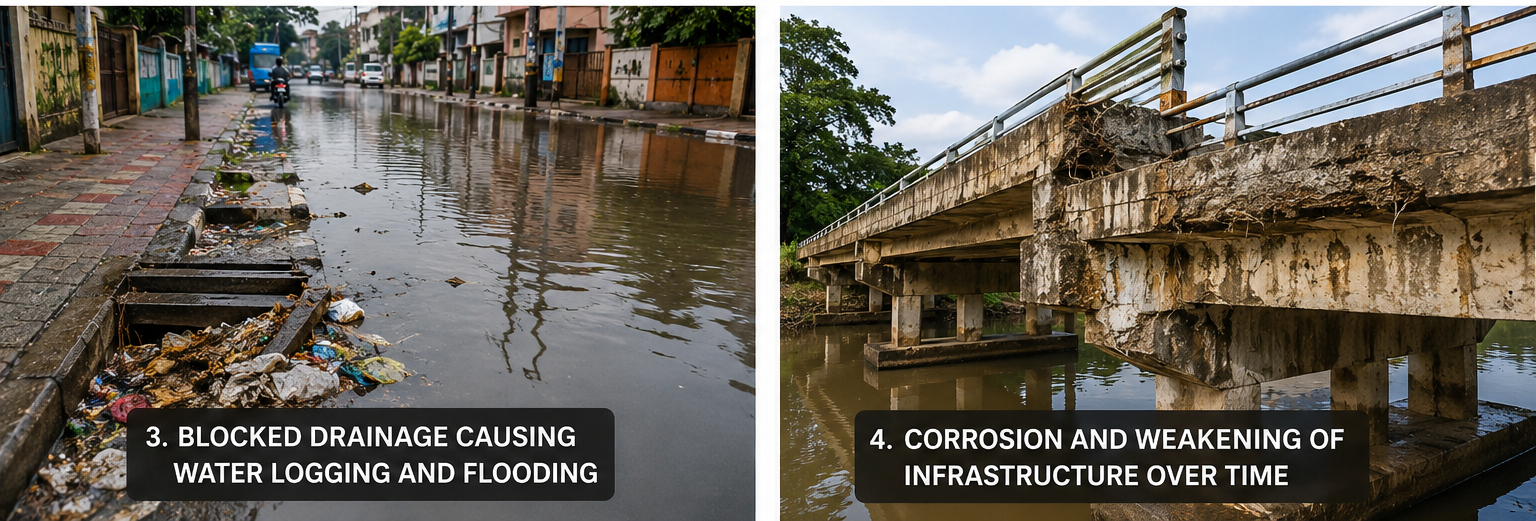
- Corroded steel reinforcement
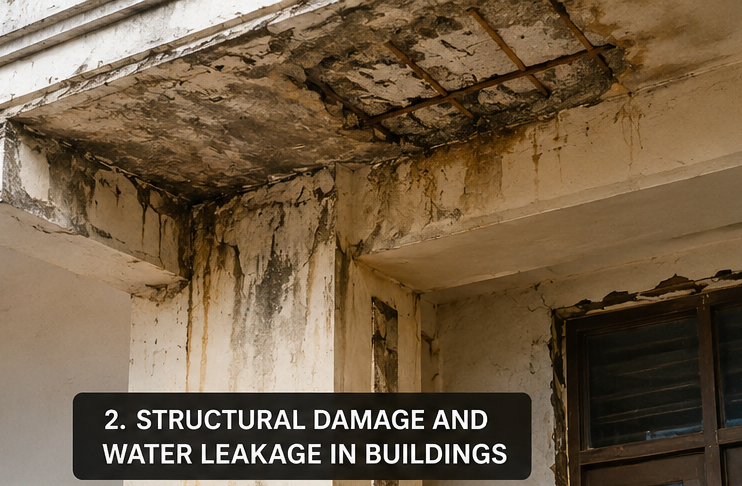
- Roof leaks and water damage
- Weak concrete surfaces
- Pavement failure on roads
If ignored, these defects compromise structural integrity and may eventually lead to collapse.
2. Increased Repair and Replacement Costs
Neglecting small repairs often results in much larger expenses later.
For example:
- A minor roof leak may lead to major ceiling collapse
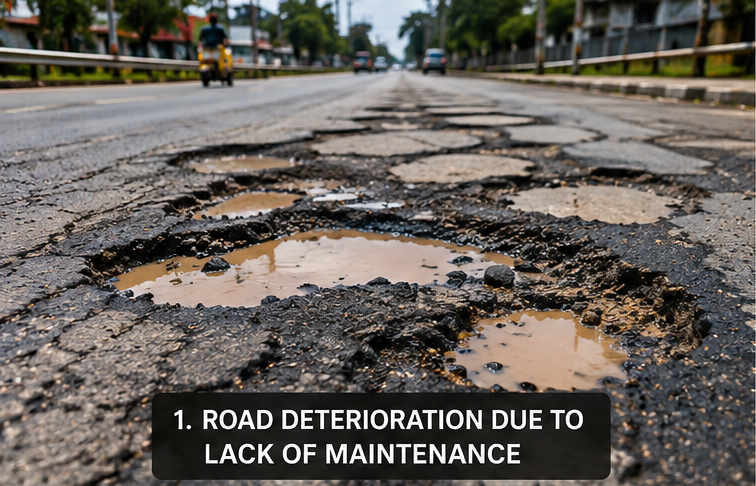
- Small road cracks can develop into large potholes
- Blocked drainage can cause severe flooding
Preventive maintenance is significantly cheaper than emergency reconstruction.
3. Reduced Infrastructure Lifespan
Properly maintained infrastructure can last for decades.
Examples:
- Well-maintained roads may last 20–30 years
- Poorly maintained roads may fail within a few years
Neglected maintenance shortens the useful life of:
- Buildings
- Roads
- Bridges
- Drainage systems
- Water infrastructure
This leads to premature replacement and financial losses.
4. Safety Hazards and Accidents
Neglected infrastructure creates dangerous conditions for the public.
Examples include:
- Building collapse risks
- Road accidents caused by potholes
- Flooding from failed drainage systems
- Falling ceilings and damaged structures
Safety failures can result in injuries, lawsuits, and loss of lives.
5. Flooding and Drainage Failure
Poor drainage maintenance is a major cause of urban flooding.
Blocked drains and damaged channels prevent water from flowing properly, leading to:
- Flooded roads
- Property damage
- Soil erosion
- Traffic disruption
Routine drainage cleaning and inspections help prevent these issues.
6. Operational Disruption
Infrastructure failure affects businesses and communities.
Examples:
- Road closures delay transportation
- Damaged buildings interrupt business operations
- Water system failures affect daily activities
Neglected maintenance reduces productivity and economic efficiency.
7. Decline in Property Value
Buildings and infrastructure that are poorly maintained lose market value.
Visible signs of neglect include:
- Peeling paint
- Structural cracks
- Water stains
- Damaged pavements
Well-maintained properties attract higher value and investor confidence.
8. Environmental Damage
Neglected infrastructure can negatively impact the environment through:
- Water leakage and wastage
- Soil erosion
- Increased material waste
- Pollution from damaged systems
Sustainable infrastructure depends on regular maintenance.
Common Areas Where Maintenance Is Often Ignored
Roads and Highways
- Pothole repairs delayed
- Drainage channels blocked
- Surface resurfacing ignored
Buildings
- Roof maintenance neglected
- Plumbing leaks ignored
- Structural cracks untreated
Drainage Systems
- Debris accumulation
- Channel collapse
- Poor water flow management
Bridges and Infrastructure
- Corrosion inspections skipped
- Joint failures ignored
- Structural monitoring delayed
Preventive Maintenance vs Reactive Maintenance
| Preventive Maintenance | Reactive Maintenance |
|---|---|
| Planned and routine | Done after failure occurs |
| Lower long-term cost | Higher repair cost |
| Extends lifespan | Shortens lifespan |
| Improves safety | Increases risk |
| Minimizes downtime | Causes disruption |
Preventive maintenance is always more cost-effective and sustainable.
Role of Engineering Professionals in Maintenance
Engineering firms help organizations:
- Conduct infrastructure inspections
- Develop maintenance schedules
- Identify structural risks
- Implement repair solutions
- Improve long-term asset performance
Professional maintenance planning reduces future liabilities.
Best Practices for Effective Maintenance
To avoid infrastructure failure, organizations should:
- Conduct regular inspections
- Repair defects immediately
- Maintain drainage systems
- Monitor structural performance
- Allocate annual maintenance budgets
- Use quality materials for repairs
These practices improve durability and reduce long-term costs.