
Road infrastructure plays a critical role in economic growth, urban development, and connectivity. However, traditional road construction methods often consume significant natural resources, generate carbon emissions, and contribute to environmental degradation. As the construction industry evolves, sustainable road construction practices are becoming essential for creating infrastructure that meets today’s transportation needs while protecting the environment for future generations.
Sustainable road construction focuses on minimizing environmental impact, optimizing resource utilization, and enhancing the long-term performance of road networks. By integrating innovative materials, energy-efficient technologies, and environmentally responsible construction methods, engineers can deliver roads that are safer, more durable, and more sustainable.
Why Sustainability Matters in Road Construction
The construction sector is one of the world’s largest consumers of raw materials and energy. Road construction projects often involve extensive earthworks, material extraction, transportation, and equipment usage, all of which contribute to greenhouse gas emissions.
Sustainable road construction seeks to address these challenges by:
- Reducing carbon emissions
- Conserving natural resources
- Minimizing construction waste
- Improving road lifespan
- Lowering maintenance costs
- Enhancing environmental protection
- Promoting community well-being
By adopting sustainable practices, governments, developers, and engineering firms can create infrastructure that supports economic growth while preserving ecosystems.
1. Using Recycled and Reclaimed Materials
One of the most effective sustainable practices is incorporating recycled materials into road construction projects.
Common recycled materials include:
Reclaimed Asphalt Pavement (RAP)
Old asphalt removed during rehabilitation projects can be processed and reused in new pavement layers, reducing the need for virgin aggregates and bitumen.
Recycled Concrete Aggregate (RCA)
Concrete debris from demolished structures can be crushed and utilized as a base or sub-base material.
Industrial By-Products
Materials such as fly ash, slag, and silica fume can enhance pavement performance while reducing environmental impact.
Benefits include:
- Reduced landfill waste
- Lower material costs
- Conservation of natural resources
- Reduced carbon footprint
2. Energy-Efficient Construction Equipment
Construction machinery significantly contributes to project emissions. Modern sustainable projects increasingly utilize:
- Fuel-efficient equipment
- Hybrid-powered machinery
- Electric construction vehicles
- Automated construction technologies
Proper equipment maintenance and optimized construction schedules further reduce fuel consumption and operational emissions.
3. Low-Carbon Pavement Technologies
Innovations in pavement engineering have introduced environmentally friendly alternatives to conventional asphalt and concrete.
Warm Mix Asphalt (WMA)
Warm Mix Asphalt is produced at lower temperatures than traditional hot-mix asphalt, resulting in:
- Reduced energy consumption
- Lower greenhouse gas emissions
- Improved worker safety
- Enhanced pavement performance
Permeable Pavements
Permeable pavement systems allow water to infiltrate through the surface, reducing stormwater runoff and supporting groundwater recharge.
These solutions are particularly valuable in urban environments where drainage challenges are common.
4. Sustainable Drainage Systems
Effective drainage is critical to road performance and environmental protection.
Sustainable drainage practices include:
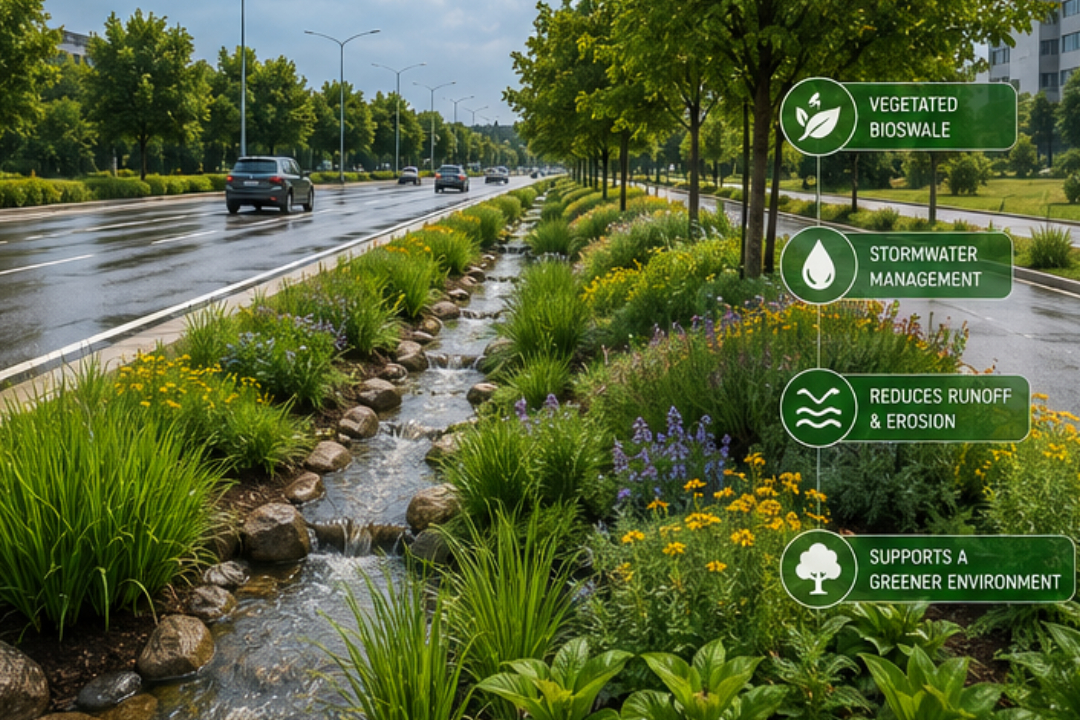
- Bioswales
- Retention ponds
- Vegetated drainage channels
- Rainwater harvesting systems
These systems help manage stormwater naturally while reducing erosion, flooding, and water pollution.
5. Protecting Natural Ecosystems
Road projects can affect wildlife habitats and natural ecosystems if not carefully planned.
Environmentally responsible construction strategies include:
- Environmental Impact Assessments (EIAs)
- Wildlife crossing structures
- Habitat restoration initiatives
- Erosion and sediment control measures
By incorporating ecological considerations into project planning, engineers can significantly reduce environmental disruption.
6. Smart Technology and Digital Construction
Digital technologies are transforming how roads are designed, built, and maintained.
Examples include:
Building Information Modeling (BIM)
BIM enables engineers to optimize designs, improve coordination, and reduce material waste.
Drone Surveying
Drones provide accurate site data, reducing survey time and minimizing site disturbances.
IoT-Based Road Monitoring
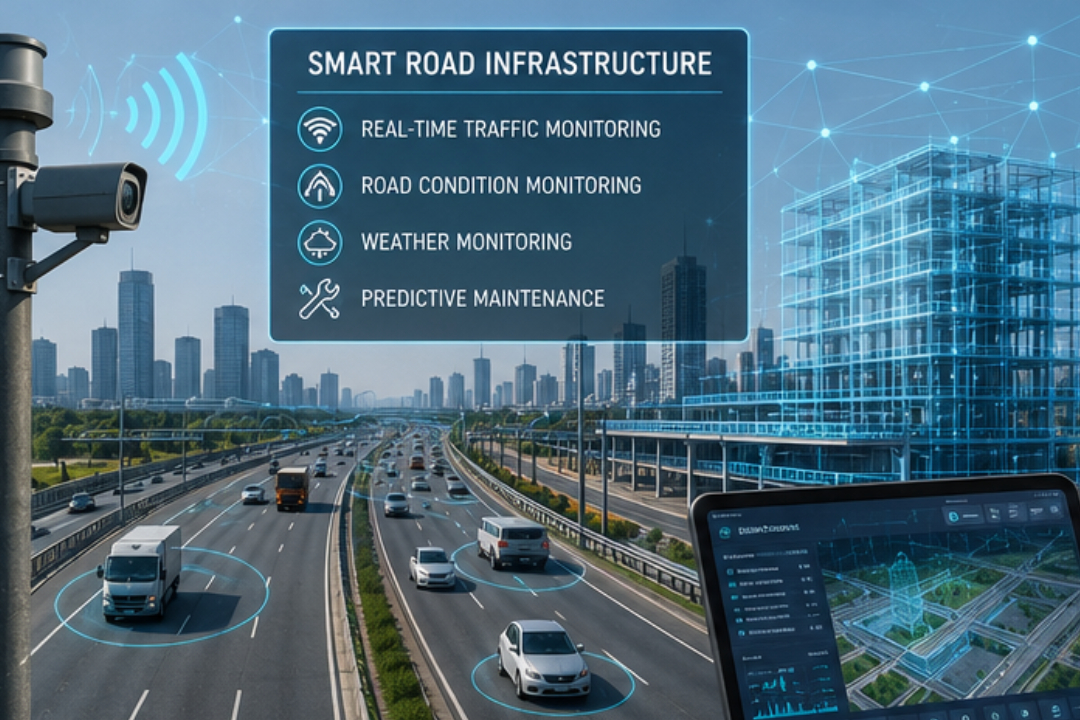
Smart sensors embedded in roads can monitor traffic loads, pavement conditions, and maintenance requirements in real time.
These technologies improve efficiency while supporting sustainability objectives.
7. Designing for Long-Term Durability
Sustainability is not only about construction methods; it also involves building infrastructure that lasts.
Durable road designs reduce the frequency of repairs and reconstruction, minimizing future resource consumption and costs.
Key strategies include:
- High-performance pavement materials
- Proper geotechnical investigations
- Quality control during construction
- Predictive maintenance planning
Investing in durability delivers significant environmental and economic benefits over the road’s lifecycle.
Economic Benefits of Sustainable Road Construction
While sustainable technologies may require higher initial investment, they often generate substantial long-term savings through:
- Reduced maintenance expenses
- Extended service life
- Lower energy consumption
- Improved resource efficiency
- Enhanced infrastructure resilience
As governments and organizations increasingly prioritize sustainability, environmentally responsible road construction is becoming a competitive advantage within the construction industry.
The Future of Sustainable Infrastructure
The future of road construction lies in balancing performance, safety, and environmental responsibility. Emerging innovations such as recycled plastic roads, carbon-neutral concrete, solar road technologies, and AI-powered infrastructure management systems are redefining what sustainable transportation infrastructure can achieve.
Engineering firms that embrace these practices are helping build smarter cities, more resilient transportation networks, and a more sustainable future.
Conclusion
Sustainable road construction is no longer an option—it is a necessity. Through innovative materials, energy-efficient technologies, smart design, and environmentally responsible construction methods, the industry can deliver infrastructure that serves communities while protecting the planet.
At Heavens Gate Engineering, we are committed to implementing modern engineering solutions that promote sustainability, durability, and excellence in infrastructure development.
For more information, visit:
https://heavensgateengineering.com.ng/
https://heavensgateengineering.com/