
Every successful construction project is the result of careful planning, quality workmanship, and effective project management. While architectural drawings and engineering designs provide the blueprint for a project, it is proper site supervision that ensures these plans are executed correctly. At the center of this critical responsibility is the civil engineer.
Site supervision is one of the most important roles performed by civil engineers. It involves overseeing construction activities, ensuring compliance with engineering specifications, maintaining safety standards, coordinating project teams, and ensuring that every stage of construction meets the required quality standards.
Without effective site supervision, construction projects are more susceptible to delays, structural defects, cost overruns, and safety hazards. This is why experienced civil engineers play a vital role in transforming engineering designs into durable, safe, and functional infrastructure.
At Heaven’s Gate Engineering and Construction, site supervision is more than simply monitoring work on-site—it’s about ensuring excellence, accountability, and precision from project commencement to completion.
What Is Site Supervision?
Site supervision is the continuous monitoring and management of construction activities to ensure that work is carried out according to approved drawings, engineering specifications, contractual requirements, safety regulations, and quality standards.
A supervising civil engineer acts as the bridge between the project owner, consultants, contractors, subcontractors, suppliers, and skilled workers, ensuring that every aspect of the project is properly coordinated.
Their objective is simple:
Deliver a safe, high-quality project on time and within budget.
Why Site Supervision Is Important
Construction projects involve numerous activities happening simultaneously. Materials arrive daily, equipment operates continuously, and multiple teams work together to complete different phases of the project.
Without proper supervision, problems such as poor workmanship, incorrect measurements, material wastage, and safety violations can quickly arise.
Effective site supervision helps to:
- Maintain construction quality
- Ensure structural integrity
- Improve worker productivity
- Prevent costly mistakes
- Reduce project delays
- Enhance communication
- Ensure compliance with engineering standards
- Protect workers and the public
- Improve client satisfaction
Ultimately, strong supervision ensures that every construction activity contributes to the project’s overall success.
Responsibilities of a Civil Engineer During Site Supervision
1. Interpreting Engineering Drawings
One of the primary duties of a site engineer is ensuring that every worker understands and follows approved construction drawings.
Civil engineers review:
- Architectural drawings
- Structural drawings
- Reinforcement details
- Foundation layouts
- Mechanical and electrical coordination drawings
- Construction specifications
Whenever discrepancies arise, they work with the design team to provide clarification before construction continues.
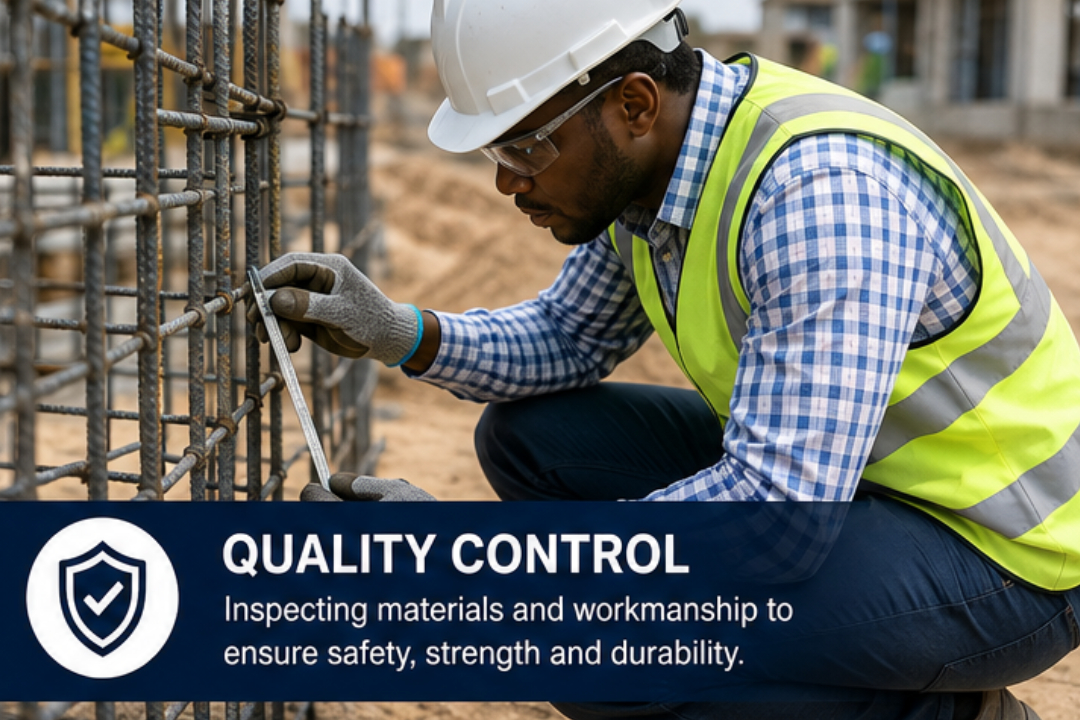
2. Monitoring Construction Quality
Quality control is a fundamental responsibility of site supervision.
Civil engineers inspect every stage of construction to ensure compliance with approved standards.
This includes checking:
- Excavation works
- Foundation construction
- Reinforcement placement
- Concrete mixing and pouring
- Masonry works
- Formwork installation
- Structural steel erection
- Finishing works
Routine inspections help identify defects early, reducing expensive rework.
3. Ensuring Workplace Safety
Construction sites contain numerous hazards that require constant monitoring.
Site engineers enforce health and safety procedures by ensuring:
- Workers wear appropriate Personal Protective Equipment (PPE)
- Scaffolding is properly erected
- Excavations are adequately protected
- Machinery is safely operated
- Electrical systems are secure
- Emergency procedures are clearly communicated
A safe construction site protects lives while improving productivity and reducing project interruptions.
4. Supervising Construction Activities
Throughout the day, site engineers coordinate ongoing activities to ensure work progresses according to schedule.
They supervise:
- Earthworks
- Reinforcement installation
- Concrete casting
- Blockwork
- Roofing
- Drainage construction
- Roadworks
- Utility installations
Continuous supervision ensures every task meets engineering standards before the next phase begins.
5. Managing Construction Materials
Even the best construction methods cannot compensate for poor-quality materials.
Civil engineers inspect incoming materials to verify that they comply with project specifications.
Materials commonly inspected include:
- Cement
- Steel reinforcement
- Concrete aggregates
- Sand
- Blocks
- Structural steel
- Pipes
- Waterproofing materials
- Finishing products
Proper material management minimizes waste while maintaining quality.
6. Coordinating Project Teams
Construction projects involve many professionals working together.
These include:
- Architects
- Structural engineers
- Mechanical engineers
- Electrical engineers
- Quantity surveyors
- Contractors
- Subcontractors
- Suppliers
- Skilled artisans
Civil engineers facilitate communication among all stakeholders, ensuring that work proceeds smoothly and efficiently.

7. Monitoring Project Progress
Meeting project deadlines requires careful planning and constant monitoring.
Site engineers compare daily progress against the approved construction schedule and identify any delays before they become major problems.
Regular progress monitoring helps:
- Improve productivity
- Allocate resources effectively
- Maintain project timelines
- Reduce unnecessary costs
Timely reporting also keeps clients informed about the project’s status.
8. Solving Site Problems
Unexpected challenges are inevitable during construction.
Common issues include:
- Poor soil conditions
- Design conflicts
- Material shortages
- Equipment breakdowns
- Adverse weather
- Utility interference
Experienced site engineers evaluate these challenges and develop practical solutions while maintaining structural safety and project quality.
9. Conducting Quality Tests
Testing is an important aspect of site supervision.
Civil engineers oversee tests such as:
- Concrete slump tests
- Concrete compressive strength tests
- Soil compaction tests
- Reinforcement inspections
- Material quality tests
- Survey checks
These tests verify that construction meets the required engineering standards.
10. Maintaining Site Documentation
Accurate records are essential for effective project management.
Site engineers prepare and maintain:
- Daily site reports
- Inspection reports
- Material records
- Progress reports
- Safety reports
- Quality control documentation
- Site instructions
- Work schedules
Comprehensive documentation supports accountability and simplifies future maintenance.
Challenges Faced During Site Supervision
Site supervision requires engineers to manage multiple challenges simultaneously.
These may include:
- Tight project deadlines
- Budget limitations
- Labour shortages
- Equipment failures
- Poor weather conditions
- Unexpected design revisions
- Safety incidents
- Material delivery delays
Strong leadership, technical expertise, and effective communication enable site engineers to overcome these challenges successfully.
Technology in Modern Site Supervision
Technology has transformed the way civil engineers supervise construction projects.
Modern tools include:
Building Information Modeling (BIM)
BIM allows engineers to visualize projects in 3D, identify clashes before construction, and improve coordination.
Drones
Drone surveys provide aerial views for monitoring project progress, inspecting difficult-to-reach areas, and improving safety.
Project Management Software
Platforms such as Microsoft Project, Primavera P6, Autodesk Construction Cloud, and Procore enable engineers to monitor schedules, manage documentation, and coordinate teams efficiently.
Digital Inspection Tools
Mobile applications allow engineers to record inspections, capture photographs, generate reports, and track quality issues in real time.
Best Practices for Effective Site Supervision
Successful civil engineers follow several best practices to ensure project success:
- Review construction drawings thoroughly before work begins.
- Conduct regular site inspections.
- Communicate clearly with all stakeholders.
- Enforce strict quality control procedures.
- Prioritize workplace safety.
- Maintain accurate project documentation.
- Monitor project schedules daily.
- Resolve issues promptly.
- Encourage teamwork and accountability.
- Continuously update technical knowledge and skills.
Benefits of Effective Site Supervision
When site supervision is carried out effectively, projects benefit from:
- Improved construction quality
- Reduced rework
- Better safety performance
- Timely project completion
- Lower construction costs
- Stronger communication
- Higher client satisfaction
- Durable and reliable infrastructure
These advantages contribute to successful projects that stand the test of time.
Conclusion
Site supervision is one of the most critical responsibilities of civil engineers. From ensuring construction quality and enforcing safety standards to coordinating teams and solving on-site challenges, effective supervision determines the success of every construction project.
At Heaven’s Gate Engineering and Construction, our experienced civil engineers provide professional site supervision to ensure that every project is delivered safely, efficiently, and to the highest engineering standards. By combining technical expertise, quality control, and modern construction technologies, we consistently deliver infrastructure that exceeds client expectations.
Whether it’s a residential development, commercial complex, industrial facility, or major infrastructure project, professional site supervision remains the cornerstone of successful construction.