Introduction
Drainage systems are one of the most overlooked yet critical components of any construction or infrastructure project. While roads, buildings, and bridges receive most of the attention, it is often poor drainage that causes early structural failure, flooding, erosion, and expensive repairs.
A well-designed drainage system protects infrastructure, extends lifespan, improves safety, and reduces long-term maintenance costs. Without proper drainage planning, even the most well-built structures can fail prematurely.
What Is a Drainage System in Construction?
A drainage system is a network designed to collect, channel, and safely discharge water away from roads, buildings, and construction sites.
It manages:
- Rainwater runoff
- Groundwater
- Stormwater flow
- Surface water accumulation
The primary goal is to prevent water from damaging infrastructure.
Why Drainage Systems Are Critical in Civil Engineering
Water is the number one enemy of infrastructure. When water is not properly controlled, it weakens foundations, erodes soil, damages pavements, and leads to structural deterioration.
Key Reasons Drainage Systems Matter
- Prevent flooding
- Protect foundations
- Increase infrastructure lifespan
- Reduce maintenance costs
- Improve road safety
- Prevent soil erosion
How Poor Drainage Damages Infrastructure
1. Foundation Weakening
When water accumulates around foundations:
- Soil becomes soft and unstable
- Load-bearing capacity decreases
- Buildings begin to settle unevenly
This leads to cracks, structural movement, and costly repairs.
2. Road and Pavement Failure
Water is one of the biggest causes of road deterioration.
Effects include:
- Potholes formation
- Asphalt softening
- Subgrade weakening
- Pavement cracking
Most road failures are directly linked to poor drainage design.
3. Soil Erosion and Land Degradation
Uncontrolled water flow washes away soil around structures, leading to:
- Foundation exposure
- Slope instability
- Landslides
- Road shoulder collapse
4. Flooding and Property Damage
Without drainage systems, heavy rainfall leads to:
- Urban flooding
- Property damage
- Traffic disruption
- Public safety risks
Flood prevention begins with proper drainage engineering.
Types of Drainage Systems Used in Construction
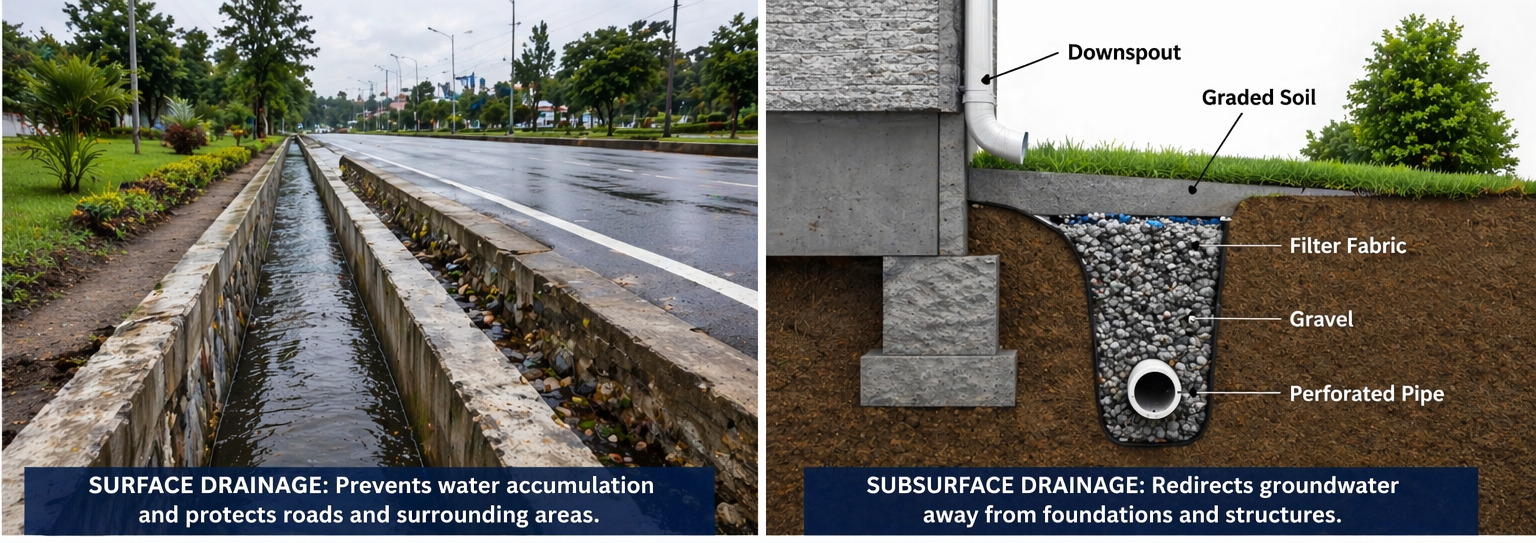
Surface Drainage
Removes water from land surfaces using:
- Channels
- Gutters
- Open drains
- Roadside ditches
Subsurface Drainage
Removes water beneath the ground using:
- Perforated pipes
- French drains
- Drainage layers
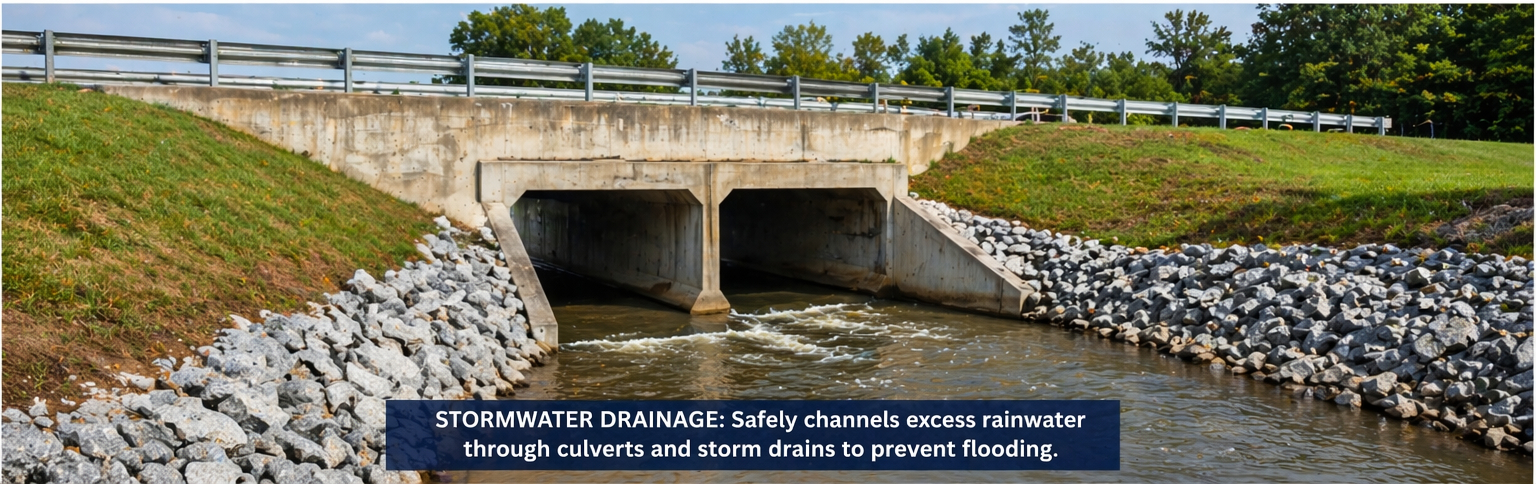
Stormwater Drainage
Manages heavy rainfall using:
- Culverts
- Storm sewers
- Retention ponds
- Catch basins
Each system works together to protect infrastructure.
Drainage in Road Construction
Proper road drainage includes:
- Side drains to channel water away
- Culverts to allow water flow under roads
- Sloped pavement for runoff
- Subsurface drainage to keep base layers dry
Without drainage, roads deteriorate rapidly and require frequent repairs.
Drainage in Building Construction
Building drainage focuses on protecting foundations and surrounding areas.
Key solutions include:
- Roof gutters and downpipes
- Foundation drainage systems
- Waterproofing and damp-proofing
- Site grading and slope design
These prevent water accumulation around buildings.
Economic Benefits of Proper Drainage Systems
Investing in drainage design saves money by:
- Reducing maintenance costs
- Preventing premature infrastructure failure
- Avoiding flood damage repairs
- Extending lifespan of roads and buildings
Preventive drainage planning is far cheaper than emergency repairs.
Drainage and Sustainable Construction
Sustainable drainage solutions include:
- Permeable pavements
- Rainwater harvesting
- Green drainage channels
- Retention and detention basins
These solutions protect infrastructure while conserving water and the environment.
Role of Engineering Professionals
Engineering experts ensure proper drainage by:
- Conducting site assessments
- Designing efficient drainage networks
- Selecting durable materials
- Implementing long-term maintenance plans
Professional drainage planning is essential for safe and durable infrastructure.